
Getting the votes in: the biggest project of all
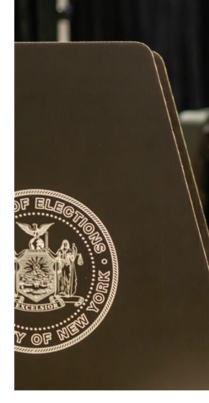 The US presidential election is an object lesson in the importance of project management – on a vast scale.
With their specific objectives, key deliverables and finite timescales, elections – that is to say, the vital processes of voting and vote-counting – are significant projects to be managed, often on a massive scale. That’s certainly a description that could be applied to the US presidential election, even though (with vote counting and recounting still under way in some states at the time of writing) the timescale may feel the opposite of finite. As Ahmed Farag, an election consultant of long standing, puts it: “The election process is a huge project with a vital outcome.”
Farag, a human rights lawyer from Egypt who has worked on observation missions to polls in Tunisia, Nigeria, Kenya, Myanmar, the Philippines, Ghana, Zimbabwe, Tanzania and even the internationally unrecognised state of Somaliland, stresses that a vital objective of managing the electoral process is “building confidence and trust in the outcome”. For the US poll, that’s an outcome important for the entire world, particularly in this pandemic era.
And so far, despite dark mutterings about fraudulent postal votes from one candidate’s camp, the challenges of conducting a poll during a pandemic and fears of a potentially chaotic transition, reports (from international election observers, among others) indicate that the election itself – and its long tail – ran, and continues to run, smoothly.
politicised projects
With stakes and emotions so high, the long and slow process of counting and validating votes to ensure a result that’s both beyond dispute and seen to be so suggests a well-managed project – one that aims to meet the objective of establishing confidence and trust in the outcome. (In such a polarised environment, that may not be entirely achieved, admittedly.)
Farag points out how complex elections are, with many moving pieces and parallel tasks. “Good management of elections requires well-calculated contingency plans, in case something goes wrong. There may be a need to accelerate processes or even redo the whole election” – as occurred in Kenya in 2017.
And the pandemic has thrown up fresh challenges: in the US, that consisted of a surge in postal voting and the need for social distancing at polling stations and counting centres. In New Zealand, by contrast, there was a one-month delay to the general election (eventually held in mid-October) after campaigning had already started. Thus, project management principles apply: authorities must be agile enough to cope with changing scenarios.
Tunisia is cited by Farag as an example of a country where election management proved agile. In 2019, as the country prepared for a general election (to be followed by a presidential one), the death of incumbent Beji Caid Essebsi, the country’s first democratically elected president, forced the need to bring the presidential poll forward in order to meet the constitutional requirement of holding an election within 90 days.
“This was a super-challenging task, especially as that period included all the phases of the nomination of candidates, campaigning and dispute resolution. That actually required the amendment of electoral law to shorten the process timeline significantly.” Yet the election went ahead smoothly: no mean feat in a country beset by the turmoil of the Arab Spring just eight years previously.
 Managing the process
Primary responsibility for managing elections, at a national, regional or local level, tends to lie with the Election Management Bodies (EMBs) of various governments. Elections are challenging processes to manage, says Farag: “To abide by legal requirements, you need to train your staff and overcome logistical challenges… the most difficult part is reflecting competency and building confidence in the process.”
Fortunately for overwhelmed governments, elections are not processes they have to manage on their own. There is a host of tools that governments can draw on when it comes to juggling all the moving parts: not just vote-casting and counting, but also voter registration, managing budgets and the flow of information and data, security, the announcement of results, verification of the process, and the many other aspects of elections.
Support exists through multilateral organisations, non-governmental organisations (NGOs) and academic bodies. The UN, through its Development Programme, offers partnership electoral support to 60 countries a year on average, including assistance in establishing independent electoral bodies. The Electoral Assistance Project, a multinational academic study established in 2012, produces research to assist EMBs in meeting international standards of electoral integrity.
Online groups such as the ACE Electoral Knowledge Network provide “comprehensive information and specialised advice on any aspect of electoral processes”, listing experts like Farag. He speaks of the “great role” played by international and local NGOs, “encouraging voters to register, reaching out to women and minorities and observing the election process itself”.
Don’t forget ‘hanging chads’
EMBs can also call on a range of private-sector companies offering election management services, including those specialising in the technologies that are changing election management. In Britain, Civica, which offers a range of election services to local authorities and organisations (including APM), promotes its secure cloud-based voting platform, which, it boasts, reduces costs, enhances voter participation and offers “real-time voter insights”.
In the US, Smartmatic, established in the wake of the ‘hanging chads’ and ‘dimpled chads’ controversy of the 2000 presidential election – whereby incompletely punched holes in card ballots resulted in votes not being counted by tabulating machines – makes the case for technology that can help to ensure electoral integrity. It asserts that, since 2003, via its own Election Management Plaform, it has “successfully designed and implemented secure voting technologies for election commissions on five continents in 25 countries”, including Argentina, Belgium, Finland, Estonia and the US itself (at state and local level).
Technology for elections may work well in a switched-on country like Estonia. But it is unlikely to usurp manual election management, particularly in developing countries, and one can only imagine the cries of potential fraud that the use of electronic voting would have provoked in this year’s presidential election. Yet technology’s role in effective and agile election management is now proven, as a 2011 project for a local election in Oslo, Norway, shows.
There, 10 months in advance, Indra, a Spanish technology solutions company, was tasked with managing the whole process, including advance voting and e-counting. Yet, with polling under way, advance voting (a growing trend in elections in general, to boost voter turnout, and especially useful when it comes to encouraging social distancing) proved far higher than expected. While measures had been taken to avoid the risk of vote duplication and double voting, this still posed a risk of the systems failing to cope, and suggested that turnout on voting day itself could also exceed expectations.
Reporting on the process, project manager Cristina Frutos López declared that an integrated system meant measures could be taken to handle the new projections. In general, Indra was able to report targets met or beaten on budget, counting timeframes and counting accuracy. In effect, the value of a project management approach had been proven.
A developing advantage?
With his deep experience in Africa and the Middle East, Farag takes issue with the suggestion that election management there tends to be more chaotic. “Every election is unique… but it can safely be said that developing countries have managed orderly elections despite all the challenges.”
Furthermore, if the goal of elections is (as it should be) greater democratisation through increased voter participation, developed countries could learn a thing or two from developing countries, where Farag has noticed turnout is generally higher. “I believe EMBs in developed countries have to increase their efforts in educating on the importance of participation,” he says.
Somaliland is a case in point. It has utilised project management to produce a positive outcome. In the run-up to its presidential election in 2017, it launched an ambitious project to get around a stubborn problem in previous polls: multiple voting and ineligible voting through the lack of a voter identification system.
Over nine months in 2016, with international and local civil society partners, the National Electoral Commission ran an ambitious project to introduce a biometric identification card system. International observers were able to report a successful rollout despite significant challenges, including a devastating drought. The rollout resulted in a major reduction in problematic voting in the election the following year. Although problems remain around updating the ID system for future elections, it is another testament to the value of project management to the electoral process.
The power of a project
A project management approach to elections can strengthen the electoral process. In effect, it’s a question of leveraging the power of democracy and the empowerment of the wider electorate in a volatile world – one that’s awaiting the final outcome of one of the most significant elections in history.
And project management’s role in elections is only likely to grow, provided it stays agile enough to cope with changing systems, as trends like an increasingly technological approach and more advance voting take hold.
After all, it’s hard to think of a project more vital. Trust is the ultimate successful outcome. As Farag puts it: “If people do not trust the result, the peaceful transition of power is threatened… which defeats the purpose of elections.”
How to convince stakeholders that a process is fair and transparent
Managing stakeholders’ perceptions that a process is fair and transparent is achieved by being true to those principles, says Elizabeth Harrin, director of project management consultancy Otobos. It might sound obvious, but often this can be easier said than done and requires tenacity and commitment.
For example, on one project Harrin worked on, business data was being collated to submit to a professional body and the wider industry. The data was analysed and a dashboard provided, but Harrin and her team didn’t know how the dashboard metrics were calculated and what data points would influence them.
“It made it very hard to improve our data because there was no transparency about the data model. What we needed was the underlying data-driven principles or model that would have allowed us to dig into how our scores were calculated so we knew what we had to do better. Eventually we did get that, but it delayed our ability to improve our metrics,” she explains.
As a project manager, actively seeking to understand a process fully means actively asking questions. This will help you acquire more information about your project, and will also hold you in good stead when communicating with stakeholders, because you will have all the facts at your disposal.
0 comments
Log in to post a comment, or create an account if you don't have one already.